Unknown's avatar

Professors on food stamps: The shocking true story of academia in 2014

The story of most career academics is the story of the adjunctification of higher education. Most college professors are adjuncts. The percentage of faculty at SDCCD, 70% adjuncts, is typical nationally. We got to this point by accepting the narrative of fiscal austerity. Decades ago, when we could have acted with more power, we didn’t. The decline in tenured faculty almost imperceptibly continues. The legions of adjuncts, who do most of the work of higher education, are, as Noam Chomsky notes, the precariat, “living a precarious existence.”  When we’re all precariat, what then? If you have a conscience, pay attention.


http://www.salon.com/2014/09/21/professors_on_food_stamps_the_shocking_true_story_of_academia_in_2014/?source=newsletter

Unknown's avatar

The Human Cost of Adjunctification and the Need for Equal Pay

Adjunctification is a machine. To halt the human destruction this machine causes, we need the power of conscience.

“It is difficult to get a man to understand something, when his salary depends on his not understanding it.”–Upton Sinclair

To local, state, and national tenured and tenure-track faculty everywhere who want justice (and I know this means you):

Before you allow resentment to define your response to adjunct resistance to an unjust order, I appeal to each of you to bring forward your best Self and rise above your resentment. Some things, perhaps hard things, need to be said.

One reason for adjunct dissent within the union is that tenured faculty, through no intentions of their own, but as a result of being part of a two-tiered class system, which existed before they came along, benefit from the exploitation and oppression of adjuncts. It’s just a fact. Let us consider it together, dispassionately.

Adjuncts are frustrated because most are in a dead-end situation. Highly educated, deeply indebted, exploited for their commitment to the public good, adjuncts feel betrayed. This is the human cost of the erosion of tenure-track positions aptly named adjunctification. Adjunctification is the first step in the scheme to privatize higher education. And this stage of the scheme is fast nearing completion.

One thing that seems to happen in the breakdown of communication between adjuncts and tenured/tenure-track faculty is the resentment that is bred by the competition between so many for the rare chance to win the lottery and escape the adjunct ranks. Sometimes, the frustration adjuncts feel erupts as resentment against the lucky one in a hundred who got the tenure-track spot for which any of the many were eminently qualified. Sometimes, it’s the lucky one who feels like he must be hated by the unlucky for his luck and so reads envy into all the comments and actions of the unlucky adjuncts. No matter who projects it, or if it is mutual, there is tension between adjuncts and tenure-track.

The fact is that the class privilege of tenure is invisible and so therefore unnoticed. Well, not exactly. Tenure-track faculty have offices, adjuncts do not. Tenure-track faculty have their own computers, adjuncts do not. Even when adjuncts have benefits, like the ones we have at AFT Local 1931, they aren’t quite as equal as those of tenure-track faculty.

But the more significant privileges are not so readily visible. The institution sees tenure-track faculty as essential, for instance, and sees adjuncts, by definition, as non-essential. It doesn’t matter if actually we are essential. And telling us we are essential rings hollow, just as it does when a tenured faculty member sings, “I once was an adjunct.” Actually, even if it may salve your conscience, when you say these things, it ultimately serves to maintain the status quo exploitation. It’s reminiscent of Freire’s “false charity.” It doesn’t help. Only “happy adjuncts” want to hear it.

Tenure-track faculty have the privilege of financial security that comes with a contract, with being defined as essential. This security, and those of you who have endured very much time in the adjunct ranks know this, is life-changing for an adjunct. It would change the quality of your life: you would have the security of providing well for your family; you would have the security of paying bills and having money left over; you would have the security of paying off your student loan. Most importantly, perhaps, you would have the academic freedom that comes with being defined as essential, and therefore, greater freedom to challenge students to grow and learn.

The financial insecurity of adjuncts has an adverse effect on students’ education. Because of our professional commitment, we deliver the best education possible, but the truth is that we are hampered by having to navigate freeways and multiple campus protocols, constantly adjust curriculum for different student populations, and struggle against the distraction of never having enough money, of living paycheck to paycheck.

I hardly need to observe that college faculty, and indeed, public education in general, are under attack. As Randi Weingarten put it about the attack on K-12 public education in a speech last year, we in higher education are, like K-12, under attack by “privatizers and profiteers” who want no less than to privatize every aspect of public education. And make no mistake, we are up against the edge of the cliff. One of the privatizers’ biggest victories has been the erosion of tenure through adjunctification to the precarious point where the number of tenure-track faculty is dwarfed by the legions of adjuncts. Like soil erosion, tenure erosion has happened so gradually that most could ignore it, especially those on the solid ground of tenure. So much has eroded by now that most of us are struggling against a slow landslide. Adjuncts are in the landslide, but the erosion is continually creeping up the hill. Ground that seems firm today eventually will erode. Unless we do something different, the number of tenured faculty will continue to decrease.

In many ways, tenured/tenure-track faculty are caught between the forces of privatization and the consequent oppression of adjuncts. I think it must sometimes be difficult for tenured faculty to fulfill their contractual duties and fully resist privatization. I wonder if they ever lie awake at night and struggle with this dilemma. At any rate, as Paolo Freire observed, one cannot be “neutral” in the struggle against oppression.

To resist privatization, to save higher education, what is our plan? What is our plan to stop the erosion of tenure? Is it the AFT FACE campaign? If it’s “advocating for more full-time positions,” what’s our timetable for reversing the erosion of tenure? And what about those who are clambering in the slow landslide? How many can be saved? How many adjuncts will go over the cliff, chained to their student loans?

If you truly want unity, if you want solidarity in the resistance to privatization, you, my tenured and tenure-track friends, need a new attitude. We need a new strategy. To begin, we need to demand equal pay for adjuncts. Adjuncts’ working conditions are student’s learning conditions; these working conditions are shared by tenured/tenure-track faculty as well, especially when, for instance, they are asked to increase their committee workload.  I think the privatizers will work relentlessly to divide us. If we are all too busy with maintaining the system or with survival, we won’t even notice the hum of their machine. Empowering adjuncts with equal pay would not only do right by adjuncts, it is a crucial strategy in the struggle to save higher education. We need a union that makes equality within its ranks the first priority.

I hope not, but, even if it’s still possible, the reversal of tenure erosion may take too long to save many of the adjuncts now in the landslide. Immediate equal pay for equal work, however, would provide a bulwark of support to stanch the slide and strengthen solidarity and resistance. It would be the first, very needed step in reclaiming the promise of higher education.

I appeal to your conscience. Do the right thing and support, no, demand equal pay for your colleagues.

“Power concedes nothing without a demand. It never did and it never will.”– Frederick Douglass

Unknown's avatar

Adjunct Pay and Anger

Here is another important discussion moderated by Joe Fruscione. Adjuncts Katie and Shondra discuss important issues about the adjunctification of higher educations and shed light on the inherent classism that separates not only professors from facilities and staff, but full-time faculty from adjunct faculty. In order for full-time faculty to avoid a sense of superiority requires a great deal of self-fknowledge as well as self-awareness. Most full-time faculty are not honest enough with themselves to reject such psychological wages; likewise, most adjuncts lack the self-honesty to admit to themselves that they are being exploited. Hence, they are willing to play a status game, like at Grossmont College, and take a label as a wage.

https://www.insidehighered.com/advice/2014/08/27/adjunct-interviews-adjunct-pay-and-working-conditions

Unknown's avatar

What’s in a Title? Are New Titles for Adjuncts Just Lipstick on a Pig?

See John Rall’s article: “An Adjunct by Any Other Name”.

Unknown's avatar

Adjunct professors fight for crumbs on campus

It’s time to begin a serious discussion about funding the adjunct revolution. Where will the equality funding come from? Colman McCarthy, in “Adjunct Professors Fight for Crumbs on Campus,” suggests trimming the salaries of top administrators. I agree, but everyone needs to pitch in, including full-time faculty, who need to be willing to use any new state funding for salaries strictly for equal pay for adjuncts. And, why not a special funding proposition? If we can afford new buildings, why not equal pay for the majority of faculty, who actually do the teaching? It’s time to ask the question asked by Florence Reece: which side are you on?

http://www.washingtonpost.com/opinions/adjunct-professors-fight-for-crumbs-on-campus/2014/08/22/ca92eb38-28b1-11e4-8593-da634b334390_story.html

Unknown's avatar

NEA – The Politics of Contingent Academic Labor

Here is a great analysis and overview of the privatization of higher education by Claire Golsdstene. It reaffirms my sense that lobbying for more full-time positions will never address the historical shift to majority contingent faculty. We, our unions and advocacy in general, need a new vision, one that seeks to  transform faculty conditions on a sweeping scale. We need to enfranchise adjunct faculty with economic parity, which is the first step to giving adjuncts the security they need fight the political fight.

NEA – The Politics of Contingent Academic Labor.

Unknown's avatar

Adjunctification, Militarization, Absurdity: An Adjunct Moment

ImageAdjunctification, Militarization, Absurdity: An Adjunct Moment

This is about an “adjunct moment,” not only for an individual adjunct, but also for the most adjunctified discipline in higher education, English Composition. At Mesa Community College in San Diego, where student demand increases annually, there is a shortage of classrooms. There is a new Math/Science building, a new medical technology building, a new continuing education building, as well as a new Social Sciences building, which is still under construction. The classrooms in these new buildings are “secured” classrooms, with alarm systems that have to be “disarmed” each time the door is unlocked. The Humanities building (now old and not LEED), mostly office space (but not enough), formerly included social sciences, as well as many kinds of humanities disciplines, including English. When Social Sciences moves out, there should be plenty of office space, since about 70% of the English department is adjunct, who, of course, have a shared office space already, but it has very few classrooms for hundreds of classes. The English department must take whatever classrooms it can find.

This semester, I am teaching in one of three “temporary” buildings located in a parking lot, at the bottom of a steep hill, below the ridge on which the main campus sits, one of those trailer-boxes that public education relies on when it can’t afford actual rooms.  I, and many other English professors, both adjunct and tenured, have taught in these rooms many times. As a matter of fact, these dilapidated, disposable rooms are, I think, among various discarded-by-other-departments official English department rooms. They have been “temporary” for about a dozen years. Sounds like an adjunct professor: dilapidated, disposable, and “temporary” for many years.

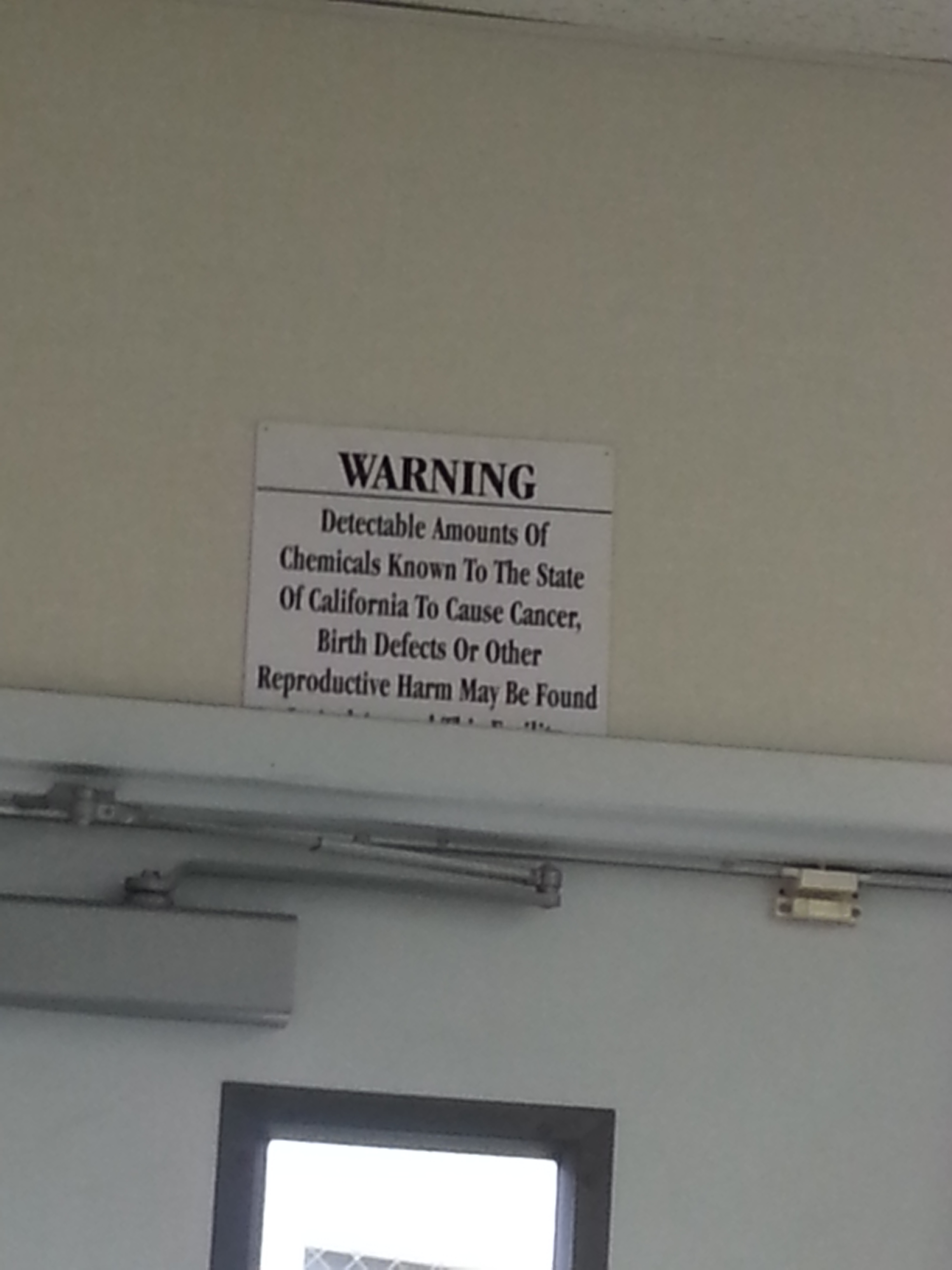
I teach two sections of English 101 in this ‘temporary” room (designated T-2), between 11:00 and 2:00, two days a week. An English colleague of mine teaches before my time and, as the first to arrive, unlocks the door, and “disarms” the room. This “arming” of rooms is, it seems, a part of the recent movement to increase security on American college campuses. In recent years, the Mesa campus police force, like campus police forces all over America, has been undergoing a process of militarization. They, too, have a new building, replete with a super-secure “inner fortress” to which only police officers are permitted entrance. They also have a new sense of “security,” a new mission which, as far as I can tell, considers faculty and students as “enemies” who need to be controlled. In line with campus militarization, at some point in its long story, grungy T-2 was armed, I suppose, to prevent theft. In addition to the typical industrial-type desks and carpet, T-2 contains two rolling whiteboards, an overhead projector, a twentieth-century TV cart, a warning sign and a clock.

One day, a couple of weeks ago, my colleague was ill and did not come to school. For the first time in the numerous times over many years that I have taught in this room, the door was locked. I have a few keys for different rooms on campus, so I was hopeful that one would fit the lock for T-2. One did. But, as I opened the door, like a banshee, the alarm sounded. I had been issued a security code, some years ago, but have never had an occasion to use it; I have kept it in the bottom of my bag. As it turned out, I had 30 seconds to disarm the alarm before it alerted the police that a breach in security had ensued. In short, I was unable to input the security code in due time. After the thirty-second window expired, the alarm began to shriek panic mode.

The police cruiser arrived; the officer approached and the re-securing process began. As my students watched, I was questioned and carded. When the officer, his voice in serious cop-tone, asked if I had identification, my inward response was “Seriously? We’re gonna do this?” I understand the officer was doing his job; but when faced with the absurdity of being carded to get into a broken down classroom substitute just to teach, I had to, as I carelessly flashed my bi-fold wallet, in the most nuanced mocking tone I could muster, opine “this is quite absurd, is it not?” Of course his reply, in serious, cop-tone, was the explanation that the alarm was a burglary alarm, to which I replied, inwardly of course, “so, your assessment of the situation was this small, bald, gray-bearded man in casual ‘business’ attire, in the middle of the day, with two dozen students watching, might be trying to burgle a whiteboard from a rusty, fast-decaying trailer-box classroom with a warning sign?” I didn’t say this because, for all I knew, he would have shot me, tasered me and arrested me for breach of security.

At first, I had the impression that he was going to carry out a truly absurd series of actions; perhaps he would even search my bag and my person?  To his credit as a human being, discrete from his conditioned role as campus police officer, his tone, and the expression on his face, altered subtly in response to my observation that we were experiencing an absurd moment, an “adjunct” moment. He said a bunch of stuff about the importance of the security of the room, and told me to be sure to lock the door and re-alarm the room after my class. I didn’t pay close attention. I’m not sure if a tenured professor, commonly indistinguishable by sight from an adjunct professor, would have been carded, or would have responded with “I’m the chair of the department,” or some other assertion of power available to a tenured professor not available to an adjunct. Probably, most English professors would have smiled and complied, as mild-mannered as we are, in general. Perhaps it is easy to take advantage of our generally agreeable disposition.

Afterwards, my class had a lively discussion about the adjunctification, militarization and corporatization of campus: a teachable moment. Students have a right to know where they are and what is happening to them.

English and the Humanities in general has long been a primary site of adjunctification. English gets the adjunct professors and the adjunct rooms. Both are maintained by acquiescence to corporatization, and enforced by the militarization of campus.

What are we to do? I don’t know; this is just a story of adjunctification, of an adjunct moment.

Note: the warning sign was determined to be a prank, and was removed.

Unknown's avatar

Reversing Adjunctification: Real Adjunct Justice

“Injustice anywhere is a threat to justice everywhere.” M. L. King

We the professors are complicit in our exploitation.

It is now a commonplace that higher education is in crisis.  Exactly what kind of crisis depends on your agenda.  The implications of California AB 955, as well as the recent California MOOC legislation, indicate that, if your agenda is privatization, you’re getting closer to your goal, despite the rejection of the MOOC initiative and the “dubious” future of AB 955.  The door has been opened more widely for the propaganda narrative of privatization, and I expect to hear more about it soon. In this “business model” narrative, professors are turned into producers, students into consumers, and learning becomes a commodity. If your agenda, on the other hand, is what’s best for students, what’s best for professors or what’s best for the public interest, then the crisis in higher education is first and foremost a crisis of justice.

The longstanding exploitation and marginalization of adjunct faculty is unjust to students. The marginalization of three-fourths of the faculty of higher education distances teacher and student. Adjuncts, “freeway fliers,” in search of a modicum wage, are forced to limit their time at any one campus; when students look for their teachers, they can’t find them. Even when adjuncts make themselves available and, through heroic efforts, provide the instruction and guidance students desire, their efforts are thwarted by an administrative bureaucracy that enforces adjuncts’ temporary and peripheral status, resulting in, for instance, no faculty advisors for new student organizations.

The shameless exploitation of adjuncts’ professional commitment does not serve the public interest. Among other goals, the privatization agenda aims to cut “labor costs,” as if the purpose of public education were to turn a profit. To this end, for decades, retiring tenured faculty members have been replaced by adjuncts until we have a professoriate which is now 75% adjunct. The status of this vast majority of faculty is perpetually tentative and, by definition, non-essential. The public interest in a healthy democracy is not served by a professoriate whose voice and power is thus fragmented and weak, and is therefore less capable of protecting academic freedom or of teaching students to innovate, make art and engage in democracy, three things which are in the public interest.

And, obviously, it is unjust to adjuncts: the exploitation of adjuncts’ commitment to students is bad enough, but the oppression which accompanies it and that so often invades the professional and personal lives of hundreds of thousands of adjuncts who struggle to pay student loans, pay rent, provide for children, and live their lives on an income immensely unjust in proportion to their education and their commitment to public service is the depth of injustice.

Perhaps this crisis of justice began with and is maintained by our inability to see ourselves, or what is happening to us. Because of this lack of clarity, we are capable of ignoring or rationalizing the crisis until it seems that there is no crisis and the crisis then becomes unquestioned business as usual.  How else can we explain the erosion of tenure-track positions over the last thirty years? How can three-fourths of college faculty be adjunct? There are many answers to this question, but our complacency in the face of adjunctification, I think, explains much.  Because the truth is too difficult to face, because the forces that compel us toward corporatization and privatization seem insurmountable, we appear to have accepted adjunctification.  Those who have descried these trends have been largely ignored and, although there has always been resistance, it never truly has been a unified and widespread resistance.

The crisis in higher education is an adjunct crisis, and the exploitation of adjunct is the exploitation of tenured. It is time we wake up and recognize what is happening. It is time we professors, all together, end our complicity with the efforts to adjunctify, corporatize and privatize higher education. At stake is not only a decent and humane life for the majority faculty, but the future of higher education itself.

We must reverse adjunctification; we must ask for more than pay equity for the second-class in a two-tiered system. From ourselves, and from those who are trying to reshape higher education based on free-market ideology, we must demand more.  We must demand the transformation of the system that is being used to dismantle the professoriate.  We must demand the restoration of a tenured majority by transitioning adjunct professors into tenure-track professors.  This would be real adjunct justice.

We, tenured and adjunct professors, must face the truth. Our rationalization is complicity. Our silence is complicity. We must speak our truth. We must speak truth to power. We must demand justice.

John R. Hoskins