 Adjunctification, Militarization, Absurdity: An Adjunct Moment
This is about an “adjunct moment,” not only for an individual adjunct, but also for the most adjunctified discipline in higher education, English Composition. At Mesa Community College in San Diego, where student demand increases annually, there is a shortage of classrooms. There is a new Math/Science building, a new medical technology building, a new continuing education building, as well as a new Social Sciences building, which is still under construction. The classrooms in these new buildings are “secured” classrooms, with alarm systems that have to be “disarmed” each time the door is unlocked. The Humanities building (now old and not LEED), mostly office space (but not enough), formerly included social sciences, as well as many kinds of humanities disciplines, including English. When Social Sciences moves out, there should be plenty of office space, since about 70% of the English department is adjunct, who, of course, have a shared office space already, but it has very few classrooms for hundreds of classes. The English department must take whatever classrooms it can find.
This semester, I am teaching in one of three “temporary” buildings located in a parking lot, at the bottom of a steep hill, below the ridge on which the main campus sits, one of those trailer-boxes that public education relies on when it can’t afford actual rooms. I, and many other English professors, both adjunct and tenured, have taught in these rooms many times. As a matter of fact, these dilapidated, disposable rooms are, I think, among various discarded-by-other-departments official English department rooms. They have been “temporary” for about a dozen years. Sounds like an adjunct professor: dilapidated, disposable, and “temporary” for many years.
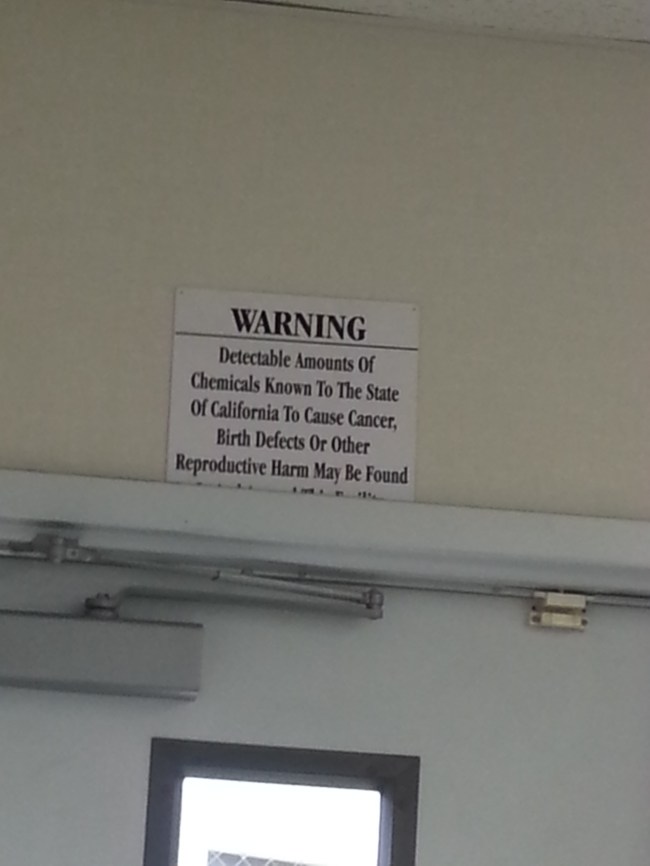
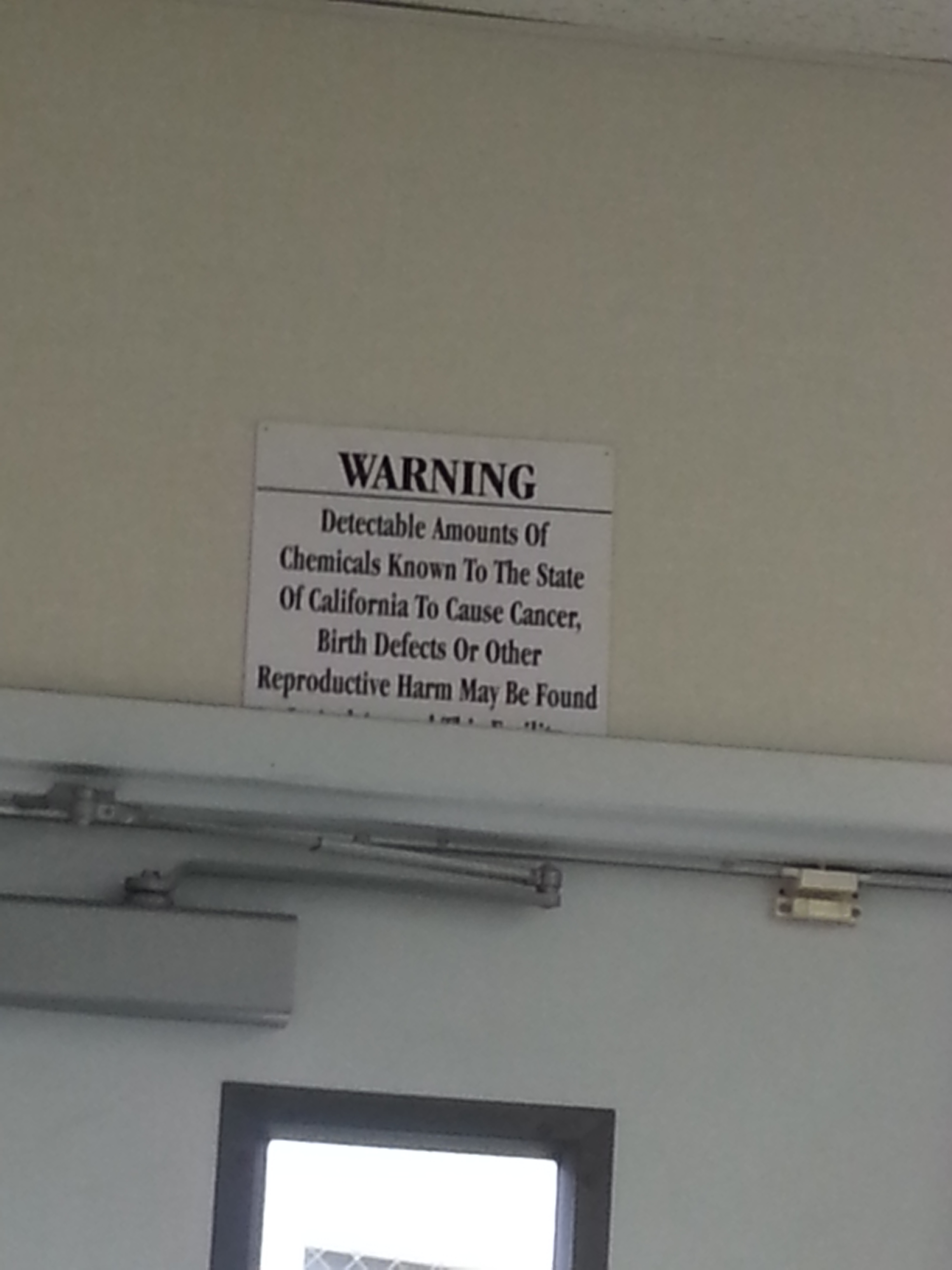
I teach two sections of English 101 in this ‘temporary” room (designated T-2), between 11:00 and 2:00, two days a week. An English colleague of mine teaches before my time and, as the first to arrive, unlocks the door, and “disarms” the room. This “arming” of rooms is, it seems, a part of the recent movement to increase security on American college campuses. In recent years, the Mesa campus police force, like campus police forces all over America, has been undergoing a process of militarization. They, too, have a new building, replete with a super-secure “inner fortress” to which only police officers are permitted entrance. They also have a new sense of “security,” a new mission which, as far as I can tell, considers faculty and students as “enemies” who need to be controlled. In line with campus militarization, at some point in its long story, grungy T-2 was armed, I suppose, to prevent theft. In addition to the typical industrial-type desks and carpet, T-2 contains two rolling whiteboards, an overhead projector, a twentieth-century TV cart, a warning sign and a clock.
One day, a couple of weeks ago, my colleague was ill and did not come to school. For the first time in the numerous times over many years that I have taught in this room, the door was locked. I have a few keys for different rooms on campus, so I was hopeful that one would fit the lock for T-2. One did. But, as I opened the door, like a banshee, the alarm sounded. I had been issued a security code, some years ago, but have never had an occasion to use it; I have kept it in the bottom of my bag. As it turned out, I had 30 seconds to disarm the alarm before it alerted the police that a breach in security had ensued. In short, I was unable to input the security code in due time. After the thirty-second window expired, the alarm began to shriek panic mode.
The police cruiser arrived; the officer approached and the re-securing process began. As my students watched, I was questioned and carded. When the officer, his voice in serious cop-tone, asked if I had identification, my inward response was “Seriously? We’re gonna do this?” I understand the officer was doing his job; but when faced with the absurdity of being carded to get into a broken down classroom substitute just to teach, I had to, as I carelessly flashed my bi-fold wallet, in the most nuanced mocking tone I could muster, opine “this is quite absurd, is it not?” Of course his reply, in serious, cop-tone, was the explanation that the alarm was a burglary alarm, to which I replied, inwardly of course, “so, your assessment of the situation was this small, bald, gray-bearded man in casual ‘business’ attire, in the middle of the day, with two dozen students watching, might be trying to burgle a whiteboard from a rusty, fast-decaying trailer-box classroom with a warning sign?” I didn’t say this because, for all I knew, he would have shot me, tasered me and arrested me for breach of security.
At first, I had the impression that he was going to carry out a truly absurd series of actions; perhaps he would even search my bag and my person? To his credit as a human being, discrete from his conditioned role as campus police officer, his tone, and the expression on his face, altered subtly in response to my observation that we were experiencing an absurd moment, an “adjunct” moment. He said a bunch of stuff about the importance of the security of the room, and told me to be sure to lock the door and re-alarm the room after my class. I didn’t pay close attention. I’m not sure if a tenured professor, commonly indistinguishable by sight from an adjunct professor, would have been carded, or would have responded with “I’m the chair of the department,” or some other assertion of power available to a tenured professor not available to an adjunct. Probably, most English professors would have smiled and complied, as mild-mannered as we are, in general. Perhaps it is easy to take advantage of our generally agreeable disposition.
Afterwards, my class had a lively discussion about the adjunctification, militarization and corporatization of campus: a teachable moment. Students have a right to know where they are and what is happening to them.
English and the Humanities in general has long been a primary site of adjunctification. English gets the adjunct professors and the adjunct rooms. Both are maintained by acquiescence to corporatization, and enforced by the militarization of campus.
What are we to do? I don’t know; this is just a story of adjunctification, of an adjunct moment.
Note: the warning sign was determined to be a prank, and was removed.


 The Adjunct Crisis
